.png)
Why has body insecurity become such a common experience for teenagers?
Updated: Mar 31
Opinion piece
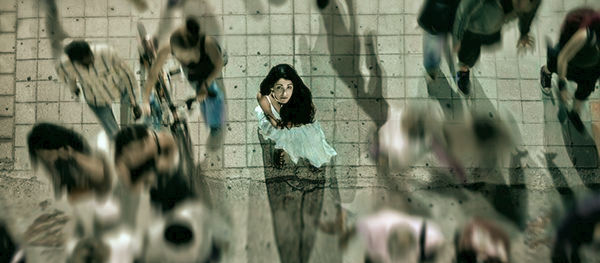
This feeling is no stranger, we’ve known this feeling long before we even knew ourselves. Looking in the mirror, turning to the side, and lifting your shirt just enough to point out every single flaw that needs to be fixed ASAP before next time you have to wear a bathing suit has become a routine, almost like a humiliation ritual every single morning. A sort of unspoken rule, that none of us consented to sign up for, yet so many of us continue to follow. “Why is this normalized?” is the question we should be asking ourselves. The answer is in clear sight, yet some of us are blinded by it: social media is constantly telling us what we should look like and what we're doing wrong, criticism from peers and family members persistently reminding us that we don’t measure up to their beauty standards, and media representation lacking diversity, while pushing unrealistic perfection that just never seems attainable. The problem isn’t us, it’s the artificial world around us that's convinced us that perfection is always the answer.
There’s no question social media is a major contributor to solidifying these insecurities, persistently pushing forth unrealistic beauty standards that seem to trap us in a neverending hole, shoving us down deeper every time we take a short glance in the mirror. Every scroll reveals a flawless body that's most likely edited to perfection, flawless teeth, flawless skin, and synthetic lives that are marketed as “normal” or as the "standard". Every filter blurs our reality a little more, the little hearts on our posts measure the currency of our success, and comparison comes without acknowledgment, like a natural reaction. Our minds have manipulated us into believing that beauty has a single definition. Perfection begins to be all we see, anything less is automatic failure, this mindset is one that is instilled in our minds long before we are old enough to question it.
Beyond all the screens, the very voices that are meant to be a safe space for us end up criticizing us to the point in which their words end up quietly pushing insecurities deeper and deeper into our perception of ourselves. A small casual comment like, “Are you sure you want more,? That's a lot of food already.” or a backhanded joke about “baby fat” echo far beyond the moment, it is instilled in our minds, moment replayed over and over again until it consumes our thoughts. When authority figures tie worth to appearance, they unintentionally create a permanent bind that resurfaces every time we look in the mirror. It reinforces the idea that our bodies are merely just science projects in need of constant tweaking, never perfect, but still room for improvement. Their approval somehow starts to feel like it's meant to be something that's earned, like a prize that pushes our bodies beyond the limit. This approval is associated with how closely we align our image with their expectations, it's never perfect, so it's never enough. Because these words are coming from authority figures in a higher power we absorb their words, hold onto them, accept them with no question. By this point insecurity doesn’t feel momentary or temporary it feels permanent like a sort of rule that can't ever be broken.
Only carrying on the everlasting loop is the unfortunate lack of diversity that the media presents. The message that the media pushes forth reads, “If you don’t look like this, you are less than.”, as most photos we see in magazines and social media posts demonstrate one skin tone, one body type, or one facial feature that is labeled as the "standard". Media representation is extremely significant as it shapes our perception of what our bodies should look like, questions like, “Why don’t I look like that?” or “Am I doing something wrong?” arise only deteriorating the image that our mind holds of ourselves. We internalize the fact that we are far from perfect, and we must achieve the artificial requirement that the media has set. The scarcity of realistic portrayals creates the interpretation that perfection is uniform, shoving us in a cage that feels inescapable, that cage is simply our own minds convincing us that we aren’t enough and will never be enough.
Ultimately, body insecurity has become such a significant issue in teens, not because we are instinctively flawed, but because we have been programmed to believe that we are. With these messages being repeated over and over again they become etched into our mind, impossible to escape becoming a routine to check over every little box as we look in the mirror every morning and every night before bed. Insecurity being a universal state of mind isn’t a coincidence; it's because as a society we’ve all fallen under the compulsion that our own minds along with social media, and numerous other factors have created to provoke this relentless cycle to continue. The issue has never been our bodies, it's the unrealistic expectations that've been imposed on them. When we start to look at issues within the standards pushed upon us instead of ourselves, we loosen the grip that has been suffocating us for so long, our worth has never depended on their impractical standards and never will. Look in the mirror, lift your shirt up, turn to the side, look in the mirror, lift your shirt up, turn to the side, look in the mirror… and the cycle is broken.

Comments